Astigmatism Correction During Cataract Surgery Princeton, Monroe Township, & Somerset, NJ

Astigmatism is one of the most common refractive conditions—and for cataract patients, addressing it at the time of surgery is one of the most impactful steps toward clear, glasses-free vision.
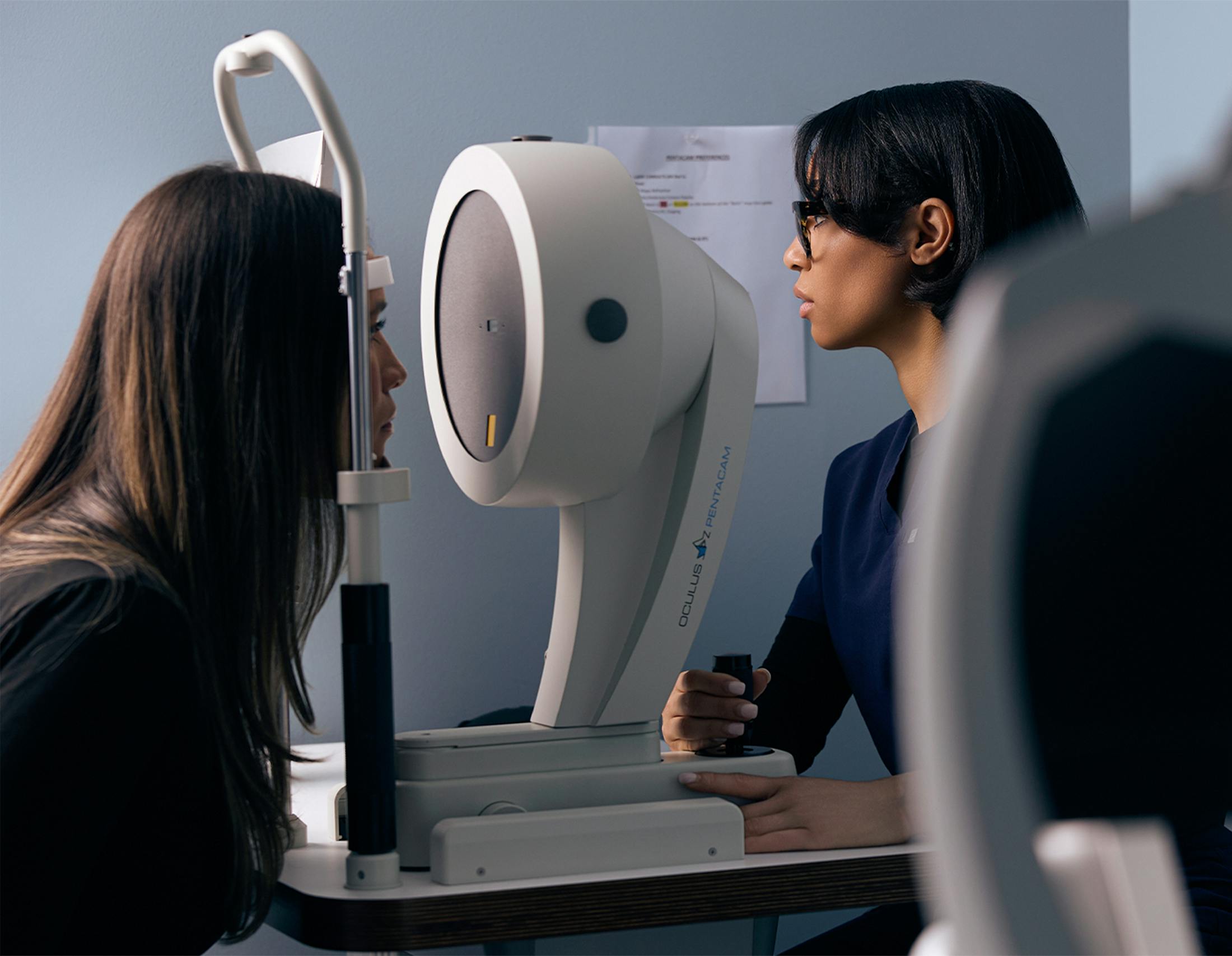

woman getting eye exam

Clearer Vision Starts With Correcting Astigmatism

For patients with astigmatism, the promise of cataract surgery can feel incomplete. A standard intraocular lens corrects the clouding of the natural lens, but if astigmatism is left unaddressed, glasses or contact lenses are still needed for clear vision after surgery for all distances. The good news is that modern cataract surgery offers highly effective options for correcting astigmatism at the time of lens implantation, giving patients the opportunity to address their full refractive profile in a single procedure.

At Princeton Eye Group, our surgeons offer a complete range of astigmatism treatments in Princeton, Monroe Township, & Somerset, NJ, from toric to light-adjustable intraocular lenses, ensuring that every patient has the best possible chance of achieving clear, sharp vision without dependence on glasses.

man smiling

What Is Astigmatism?

Astigmatism is a refractive error caused by an asymmetric curvature of the cornea or lens. Instead of being perfectly spherical, an astigmatic eye has more curvature in one meridian than another—similar to the shape of a football rather than a basketball—causing light to focus at multiple points rather than a single sharp point on the retina. The result is blurred or distorted vision at all distances. Astigmatism is extremely common and is present to some degree in the majority of eyes. When significant astigmatism is present at the time of cataract surgery, addressing it as part of the procedure can dramatically reduce or eliminate the need for glasses for distance vision following surgery.

Why Correct Astigmatism During Cataract Surgery?

  • Reduces or Eliminates Dependence on Distance Glasses: Correcting astigmatism at the time of cataract surgery significantly improves uncorrected distance vision, allowing many patients to drive, watch television, and perform most distance tasks without glasses.
  • Maximizes the Value of Premium Lens Implants: For patients choosing multifocal or EDOF lenses, correcting pre-existing astigmatism is essential to achieving the full visual benefit of the premium lens. Uncorrected astigmatism can significantly compromise the performance of any premium IOL.
  • A Single Procedure for Comprehensive Correction: Addressing astigmatism at the time of cataract surgery means patients can achieve their refractive goals without the need for a separate procedure following surgery.
  • Precise, Reproducible Correction: Modern toric and Light Adjustable IOLs offer a high degree of accuracy and reproducibility in astigmatism correction, with outcomes that are more predictable than ever before.
  • Available Across Multiple Lens Platforms: Toric versions of leading premium IOLs—including multifocal, EDOF, and light-adjustable lenses—are available to address astigmatism while simultaneously providing the full visual range benefits of the premium lens platform.
  • Long-Lasting Results: Toric IOL correction is permanent, with the lens designed to remain stable within the eye for a lifetime.

Astigmatism Correction Options We Offer

Toric Intraocular Lenses

Most leading premium IOL platforms are available in toric versions, allowing patients to simultaneously address astigmatism and achieve the full visual range benefits of their chosen premium lens. Standard monofocal lenses are also available in toric versions for patients whose primary goal is clear distance vision without astigmatism, rather than reduced dependence on glasses overall.

A toric IOL is a specially designed intraocular lens with different powers in different meridians, allowing it to correct the unequal curvature of an astigmatic cornea in addition to addressing the standard spherical refractive error. We use toric lenses in Princeton, Monroe Township, & Somerset, NJ, during cataract surgery to provide precise, permanent astigmatism correction that is locked in at the time of implantation. Precise pre-operative corneal measurements and careful rotational alignment during surgery are critical to achieving optimal toric lens outcomes. Premium toric platforms available at Princeton Eye Group include the PanOptix Pro, TECNIS Odyssey, enVista Envy, Vivity, and TECNIS PureSee.

Light Adjustable Lenses

The Light Adjustable Lens takes a different approach to astigmatism correction. Rather than locking in the correction at the time of implantation, as toric lenses do, the LAL allows astigmatism to be precisely addressed after surgery through a series of UV light delivery treatments. This post-operative customization offers a level of precision that is difficult to match with fixed toric lenses, making it a particularly valuable option for patients with significant or complex astigmatism.

Post-Operative Laser Vision Correction

For patients with residual astigmatism following cataract surgery that was not fully addressed by the implanted lens, laser vision correction—including LASIK or PRK—can be performed after the eye has fully healed to refine the refractive outcome. This approach is also an option for patients who choose a standard monofocal or non-toric lens and wish to address their astigmatism as a separate procedure. Princeton Eye Group's Lasik and Vision Correction Department provides patients with access to expert laser vision correction as a natural extension of their cataract care.

Schedule a Consultation

Contact Us
Contact us media

The Astigmatism Correction Process What to Expect

Comprehensive Pre-Operative Evaluation

Your Princeton Eye Group surgeon will perform detailed corneal topography and biometry to precisely measure the degree and axis of your astigmatism, confirm the most appropriate correction approach, and calculate the correct toric lens power or light-adjustable lens for your anatomy.

Personalized Surgical Plan

Based on your corneal measurements and refractive goals, your surgeon will recommend the most appropriate astigmatism correction strategy and integrate this into your overall cataract surgery plan.

Procedure Day

Astigmatism treatment in NJ is performed as part of the cataract surgery procedure on an outpatient basis. For toric lenses, precise rotational alignment of the lens is performed during implantation to ensure the corrective power is oriented along the appropriate meridian.

Post-Operative Assessment

Your surgeon will assess your refraction and corneal topography at follow-up appointments to confirm the accuracy of the astigmatism correction. If any residual astigmatism remains that affects your visual outcome, options for further refinement will be discussed.

Long-Term Monitoring

Toric IOL correction is permanent and stable for the lifetime of the lens. Your physician will continue to monitor your refractive outcome as part of your routine post-operative care.

Your Astigmatism Correction Results and Recovery

Recovery following toric lens implants in NJ follows the same general course as standard cataract surgery, with meaningful visual improvement typically noticeable within the first day or two following the procedure. Patients who achieve accurate toric lens alignment often notice a dramatic improvement in the clarity of their distance vision almost immediately, with continued refinement as the eye heals over the following weeks. The vast majority of patients with well-corrected astigmatism achieve excellent uncorrected distance vision following surgery, with glasses needed primarily for near tasks when a monofocal or EDOF lens is chosen. For patients with premium multifocal lenses, successful astigmatism correction is essential to realizing the full range of visual freedom the lens is designed to provide.

IOLMaster biometer

Why Choose Princeton Eye Group for Astigmatism Treatment?

Princeton Eye Group offers the surgical expertise, advanced diagnostic technology, and comprehensive premium lens program necessary to achieve the most precise and personalized astigmatism correction available to cataract patients throughout New Jersey.

Advanced Corneal Measurement Technology

Precise astigmatism correction depends on the accuracy of pre-operative corneal topography and biometry. Princeton Eye Group uses advanced imaging and measurement technology to characterize each patient's astigmatism with the highest possible level of precision, laying the foundation for an accurate surgical outcome.

The Full Range of Toric Lens Options

Princeton Eye Group offers toric versions of all leading premium IOL platforms, ensuring that patients with astigmatism can benefit from the full range of premium lens technologies—multifocal, EDOF, and light-adjustable—without compromising on astigmatism correction.

A Pioneer in Advanced Technology Lens Surgery

Dr. Michael Wong is one of only eight national mentors tasked with setting standards of care for advanced technology intraocular lenses, including toric IOLs. This level of expertise in premium lens surgery directly benefits every patient who chooses astigmatism correction at Princeton Eye Group.

Integrated Refractive and Cataract Expertise

Princeton Eye Group's LASIK and Vision Correction Center is conveniently located in the Princeton office.  This means that patients who require post-operative laser enhancement for residual astigmatism have access to expert LASIK and PRK services as a seamless extension of their cataract care, all within a single, trusted practice.

Convenient Locations Across Central New Jersey

With offices in Princeton, Monroe Township, and Somerset, Princeton Eye Group makes comprehensive cataract and astigmatism care accessible to patients throughout the region in a setting that is physician-led, personalized, and convenient.

Astigmatism Treatment Frequently Asked Questions

Can astigmatism always be corrected at the time of cataract surgery?

In most cases, yes. The degree of astigmatism correction achievable at the time of cataract surgery is determined by the available toric lens powers and the patient's specific corneal profile. For very irregular astigmatism patterns, such as those associated with keratoconus, standard toric lenses may not provide adequate correction, and alternative approaches may be recommended. Your surgeon will advise based on your corneal measurements.

How accurate is toric IOL correction?

Modern toric IOLs, combined with precise pre-operative measurement and careful intraoperative alignment, achieve a high degree of accuracy for the majority of patients. Outcomes have improved significantly with advances in biometry technology and surgical planning tools. Your surgeon will discuss realistic expectations based on your specific astigmatism profile.

What happens if the toric lens rotates after surgery?

Toric IOLs are designed with features that promote rotational stability within the capsular bag. In rare cases where a lens rotates out of alignment post-operatively, a minor repositioning procedure can restore the correct orientation. Your physician will monitor alignment at follow-up appointments.

Do I still need glasses after toric IOL implantation?

Toric IOLs correct astigmatism and the spherical refractive error simultaneously, and most patients achieve excellent uncorrected distance vision following surgery. Whether glasses are needed for near or intermediate tasks depends on the type of lens chosen. Patients with toric multifocal or EDOF lenses generally experience the broadest range of glasses-free vision.

Does insurance cover toric lens correction?

Medicare and most insurance plans cover standard cataract surgery, but the premium upgrade to a toric IOL involves an out-of-pocket cost. Our team can discuss the associated costs and financing options during your consultation.

Can astigmatism correction be combined with presbyopia correction?

Yes. Toric versions of multifocal and EDOF lenses address both astigmatism and presbyopia simultaneously, correcting across near, intermediate, and distance focal ranges while eliminating the blur associated with uncorrected astigmatism. Your surgeon will help determine the optimal combination for your visual goals.

What if I have astigmatism but choose a standard lens for my cataract surgery?

Patients with residual astigmatism following cataract surgery with a standard lens can pursue laser vision correction—LASIK or PRK—after the eye has fully healed to address the remaining refractive error. Princeton Eye Group's LASIK and Vision Correction Department provides a natural pathway for this type of post-cataract refractive refinement.

Accessibility: If you are vision-impaired or have some other impairment covered by the Americans with Disabilities Act or a similar law, and you wish to discuss potential accommodations related to using this website, please contact our Accessibility Manager at (609) 921-9437.
Request an Appointment