Glaucoma Care Princeton, Monroe Township, & Somerset, NJ

Glaucoma is one of the leading causes of irreversible blindness worldwide, but with early detection and expert care, its progression can be slowed and vision preserved.

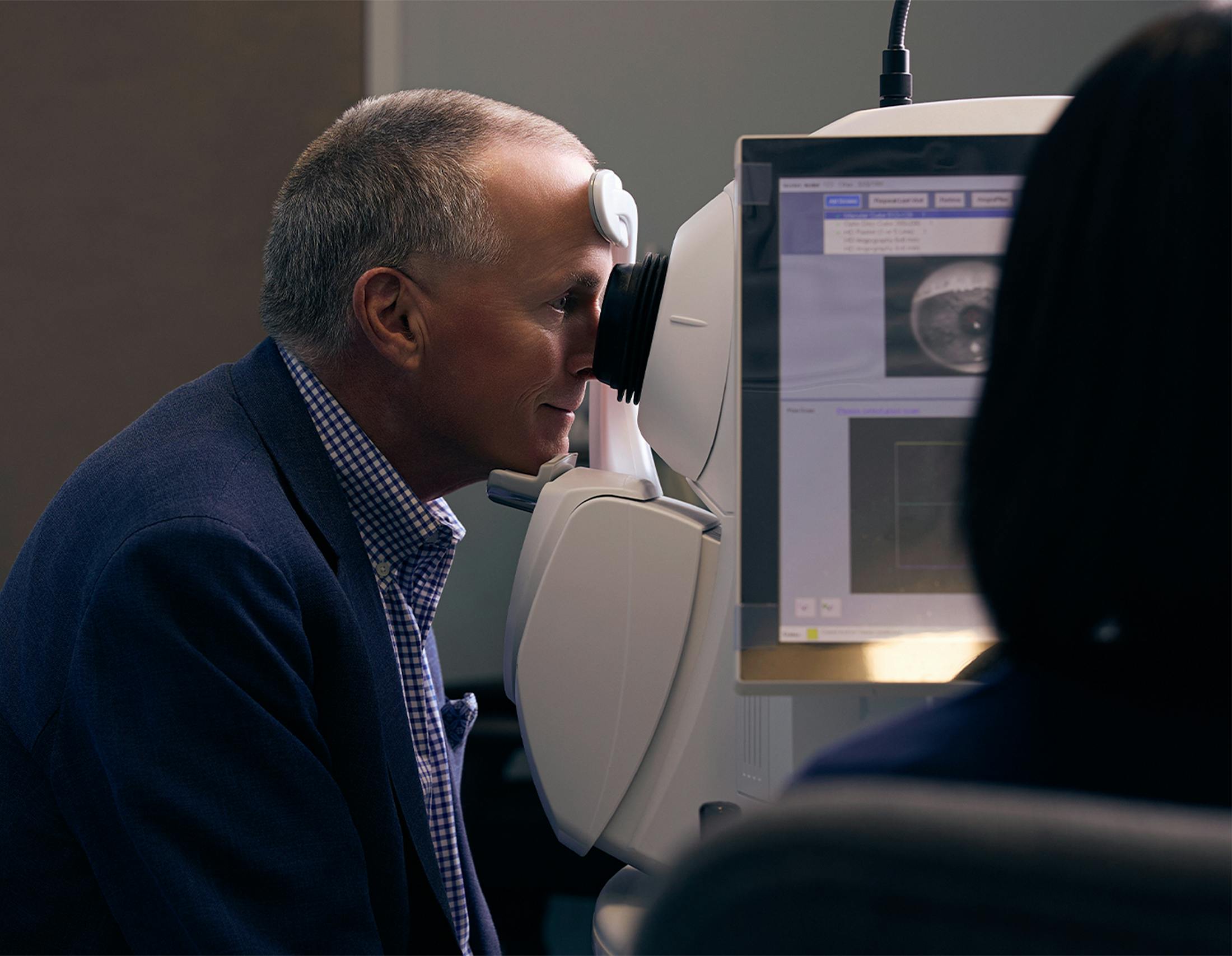
man getting his eyes tested

Don't Let a Silent Disease Steal Your Sight

Glaucoma earns its reputation as the "silent thief of sight" for good reason. In its most common form, it produces no pain, no symptoms, and no warning until significant, permanent vision loss has already occurred. By the time most patients notice changes to their vision, the damage to the optic nerve is already done. The only way to catch glaucoma before it causes lasting harm is through regular comprehensive eye examinations—and when it is found, to treat it with the precision and persistence the disease demands. At Princeton Eye Group, our fellowship-trained glaucoma specialists take a comprehensive, patient-centered approach to glaucoma care, combining the most advanced diagnostic tools with the full spectrum of treatment options to protect every patient's vision for the long term.

What Is Glaucoma?

Glaucoma is a group of eye diseases characterized by progressive damage to the optic nerve, most commonly caused by elevated intraocular pressure. The optic nerve transmits visual information from the eye to the brain. When it is damaged by sustained high pressure, the result is an irreversible loss of peripheral vision that can progress to complete blindness if left untreated.

To understand how glaucoma develops, it helps to think of the eye's fluid drainage system like a sink with the faucet running continuously. A clear fluid called aqueous humor is produced constantly inside the eye and flows out through a microscopic drainage angle. When that drainage angle becomes blocked or less efficient, fluid builds up, and because the eye is a closed structure, pressure rises rather than overflows. It is this sustained elevation in pressure that damages the optic nerve over time.

Corneal topographer

Types of Glaucoma

The most common form—primary open-angle glaucoma—develops slowly and silently over years, making routine screening essential for early detection. Other forms, including angle-closure glaucoma, normal-tension glaucoma, and secondary glaucomas, require different diagnostic and treatment approaches. Princeton Eye Group's glaucoma specialists are experienced in diagnosing and managing the full spectrum of glaucoma presentations.

Banner media

In Partnership with WillsEye Hosptial

Meet Princeton Eye Group’s Glaucoma Specialists

Daniel Lee, MD

Ophthalmologist, Glaucoma Specialist

Dr. Lee brings fellowship training in glaucoma to Princeton Eye Group and previously directed the Glaucoma Research Center at Wills Eye Hospital. His research contributions include more than 100 publications, and he has served as a primary investigator on clinical trials exploring next-generation glaucoma treatments.

Sarah Kuchar, MD

Ophthalmologist, Glaucoma Specialist

A Yale graduate, Dr. Kuchar trained in glaucoma care under some of the field's foremost specialists during her fellowship at Wills Eye Hospital. Beyond her clinical work at Princeton Eye Group, she regularly participates in international humanitarian eye care missions.

Schedule a Consultation

Contact Us
Contact us media

Personalized Glaucoma Care Our Approach

At Princeton Eye Group, we believe glaucoma care should be individualized rather than following a one-size-fits-all approach. Our specialists work with each patient to develop a treatment plan that reflects the severity and rate of progression of their disease, their lifestyle, medication tolerance, and their personal goals and preferences. For some patients, interventional approaches such as earlier laser treatment or surgical intervention may offer meaningful advantages, including better long-term intraocular pressure control, reduced dependence on medications, or improved quality of life. We discuss the benefits and tradeoffs of each option so that treatment decisions align with both the clinical situation and the patient's comfort with risk.

As glaucoma specialists, we offer the full spectrum of modern treatment options—from medications to laser procedures and minimally invasive or traditional glaucoma surgery. Rather than relying on a predetermined treatment pathway, we tailor our recommendations to each patient's needs, recognizing that the right approach may change over time as the disease evolves.

Glaucoma Drop Management

Prescription eye drops are often an important part of controlling glaucoma and lowering intraocular pressure. We take a thoughtful, individualized approach to glaucoma drop management, with the goal of using the fewest medications necessary to achieve safe and effective pressure control. Whenever possible, we work to minimize the number of daily eye drops to reduce side effects, simplify treatment routines, and maximize quality of life.

Sustained-Release Glaucoma Medications

For appropriate patients, sustained-release glaucoma medications such as iDose® and Durysta® can provide an alternative to daily eye drops. These treatments are designed to deliver medication gradually over an extended period, helping lower intraocular pressure while reducing the burden of remembering and administering drops every day. By minimizing the need for frequent eye-drop use, sustained-release therapies may help reduce medication-related side effects, simplify daily routines, and improve quality of life. We carefully consider each patient’s glaucoma, treatment goals, and overall health when determining whether a sustained-release medication is an appropriate option.

Glaucoma Laser Treatment

Laser procedures such as selective laser trabeculoplasty (SLT) offer an effective, non-incisional approach to lowering intraocular pressure, either as a first-line treatment or as a complement to medications. Laser treatment is performed in-office and requires no recovery time.

Laser peripheral iridotomy (LPI) is a minimally invasive laser procedure used to treat or prevent angle-closure glaucoma. By creating a tiny opening in the iris, LPI improves the flow of fluid within the eye and helps relieve or prevent blockage of the drainage angle. The procedure is typically performed in the office and takes only a few minutes, with little to no downtime.

Minimally Invasive Glaucoma Surgery (MIGS)

MIGS procedures use micro-scale surgical techniques to improve fluid drainage from the eye with a favorable safety profile and faster recovery than traditional surgery. Many MIGS procedures can be performed at the time of cataract surgery, making them an efficient option for patients managing both conditions simultaneously.

Glaucoma Surgical Treatment

For patients with advanced glaucoma or disease that has not responded adequately to medications and laser therapy, surgical options including trabeculectomy, tube shunt surgery, and the XEN gel stent provide more aggressive and sustained pressure reduction to protect the optic nerve from further damage.

In some situations, glaucoma can cause dangerously high intraocular pressure that requires urgent surgical intervention. When pressure needs to be lowered quickly to protect the optic nerve and preserve vision, we provide timely evaluation and surgical treatment tailored to the individual patient’s condition.

Glaucoma Second Opinions & Complex Surgical Care

Glaucoma can be complex, particularly when previous treatments or surgeries have not achieved the desired results.

We offer comprehensive second opinions for patients seeking an independent assessment of their diagnosis, treatment options, or long-term management plan.

For patients who have experienced complications or inadequate results from prior glaucoma surgery, we also provide complex glaucoma surgical revisions and repairs. These may include evaluating and revising previous glaucoma procedures, addressing surgical complications, and developing a personalized plan to restore or improve intraocular pressure control whenever possible.

Banner media

Why Choose Princeton Eye Group for Glaucoma Care?

Princeton Eye Group's glaucoma program is led by two fellowship-trained specialists whose combined expertise spans clinical research, academic medicine, and high-volume complex glaucoma surgery, all delivered in a patient-centered community practice setting across New Jersey.

Dr. Sarah Kuchar: Advanced Glaucoma & Surgical Expertise

Dr. Sarah Kuchar completed her ophthalmology residency at Wills Eye Hospital, where the Wills Eye faculty selected her to serve as Chief Resident, a distinction recognizing outstanding performance among her residency class. She subsequently completed her glaucoma fellowship at Wills Eye Hospital, training under the world's leading experts in the field. She specializes in glaucoma procedures and surgeries, including laser treatments and filtering surgery, and has presented her research at national conferences. Her humanitarian work, including volunteer service at a mission hospital in Africa through the Wills International Research Elective, reflects a physician whose commitment to vision preservation extends well beyond the office.

Dr. Daniel Lee: Research-Driven Glaucoma Expertise

Dr. Daniel Lee completed his ophthalmology residency at Yale University, followed by a glaucoma fellowship at Wills Eye Hospital. He subsequently joined the Wills faculty, where he served as Director of the Glaucoma Research Center and gained extensive experience managing both routine and complex glaucoma cases. He has served as a principal investigator in multiple clinical trials and has authored more than 100 scientific publications.

Dr. Lee has presented extensively on glaucoma surgical decision-making and teaches courses on the prevention and management of glaucoma surgical complications and ocular pharmacology. His combination of surgical experience, research, and teaching allows him to provide evidence-based, individualized care focused on protecting vision and maximizing quality of life.

The Full Spectrum of Glaucoma Treatment

From in-office laser procedures to MIGS and complex filtering surgery repairs and revisions, Princeton Eye Group offers every level of glaucoma intervention under one roof, ensuring that treatment can be escalated or adjusted as a patient's disease evolves without the need for outside referrals.

Integrated Subspecialty Care

Because Princeton Eye Group covers nearly every ophthalmic subspecialty, glaucoma patients benefit from seamless collaboration with cataract, cornea, and retinal specialists when their care requires it; a level of integrated expertise that standalone glaucoma practices cannot provide.

Convenient Access Across Central New Jersey

With offices in Princeton, Monroe Township, and Somerset, Princeton Eye Group makes consistent, long-term glaucoma management accessible to patients throughout the region—an important consideration for a lifelong condition that requires ongoing monitoring and care.

Testimonials Patient Perspectives

"Dr. Kuchar is the most caring and compassionate eye doctor and great surgeon. My husband had a botched eye surgery by a doctor at Matossian, where his iris popped out from high ey...
"Dr. Kuchar is the most caring and compassionate eye doctor and great surgeon. My husband had a botched eye surgery by a doctor at Matossian, where his iris popped out from high eye pressure. No glaucoma specialists would help him with the botched surgical eye, until we saw Dr. Kuchar. She did surgeries on each of his eyes, and my husband has been under her care for the last several years. He can see well now, and is able to focus in with both eyes. Her knowledge about glaucoma, and her wonderful bedside manner are unsurpassed by any of the 5 ophthalmologists we saw before we found her. She is the reason my husband still leads an active and independent life."

—Debra Dempsey

"Dr Epstein is a genuine eye expert who was recommended to me by a large health organization. It was and is well worth the 1.5 hr drive to be seen by him on multiple visits for my ...
"Dr Epstein is a genuine eye expert who was recommended to me by a large health organization. It was and is well worth the 1.5 hr drive to be seen by him on multiple visits for my cataract surgery and glaucoma treatment. He explains everything super clearly, and with a smile. His extensive knowledge and outstanding skills have resulted in much improved vision and healthier eyes for myself. I highly recommend him as an eye care professional you can trust and rely upon. P.S. His staff is A+ and their brand new building at 950 Hamilton Street in Somerset nj is EZ to park/enter... very roomy, comfortable and modern."

—Norma Moskowitz

"Office provides great professional care. I had Dr Brandt I could not have asked for a more professional and caring doctor. Office staff were caring and professional"

—Kathy Stuart

"Absolutely great care and an awesome staff."

—Anthony Montalbano

"I have been a patient of the Princeton Eye Group for about 5 years. Things were pretty straight forward until 2020 - there was concern I had the early-stages of glaucoma, our daug...
"I have been a patient of the Princeton Eye Group for about 5 years. Things were pretty straight forward until 2020 - there was concern I had the early-stages of glaucoma, our daughter poked me in the eye during a shoe-lace tying lesson, and the elastic in over the right ear in my COVID mask snapped - launching the metal nose-piece and stiff filter material into my left-eye. The last (latest event) was extremely painful - and both my eyes could not stop tearing. From the person who has answered the phone, to when I pay the bill every person from beginning to end whom I have met over the past 5-years is top-notch. The middle of course are the extremely fabulous Doctors. A great practice!"

—Andrew Sutphin

"Dr Epstein recently performed cataract a glaucoma surgery on both of my eyes. The outcome was far more than I could have even wished for; 20/20 vision in both eyes! Thank you, Dr....
"Dr Epstein recently performed cataract a glaucoma surgery on both of my eyes. The outcome was far more than I could have even wished for; 20/20 vision in both eyes! Thank you, Dr. Epstein, for your outstanding skill, care, and kindness."

—Dianne S.

Glaucoma Care Frequently Asked Questions

What are the early signs of glaucoma?

Primary open-angle glaucoma, the most common form, typically produces no symptoms in its early stages. Peripheral vision loss is usually the first noticeable sign, but by the time it is perceived, significant optic nerve damage has already occurred. This is why routine eye examinations are the most important tool for early detection.

Who is at risk for glaucoma?

Risk factors for glaucoma include elevated intraocular pressure, a family history of glaucoma, age over 60, African or Hispanic ancestry, thin corneas, and certain medical conditions such as diabetes and high myopia. Patients with one or more of these risk factors should discuss screening frequency with their eye care provider.

How often should I have my eyes examined for glaucoma?

There is no single recommended screening schedule that applies to everyone. The frequency of comprehensive eye examinations depends on your age, family history, medical history, and other risk factors for glaucoma. The American Academy of Ophthalmology recommends a baseline comprehensive eye examination at age 40, with follow-up examinations based on age and individual risk factors. People with a family history of glaucoma, elevated eye pressure, certain medical conditions, or other risk factors may benefit from more frequent examinations. Because glaucoma often develops without noticeable symptoms, regular comprehensive eye examinations are important for detecting the disease early, when treatment can help protect vision.

How is glaucoma diagnosed?

Glaucoma is diagnosed through a comprehensive eye examination that includes measurement of intraocular pressure, evaluation of the drainage angle, assessment of the optic nerve, visual field testing, and imaging of the optic nerve and retinal nerve fiber layer. Multiple visits and tests are often needed to confirm a diagnosis and establish a baseline for monitoring progression.

Can glaucoma be cured?

There is currently no cure for glaucoma. However, with appropriate treatment, its progression can be slowed significantly and vision preserved over the long term. The key is early detection and consistent, ongoing management.

What is the difference between open-angle and angle-closure glaucoma?

To understand the difference, it helps to first understand how fluid normally moves through the eye. Aqueous humor is the clear fluid produced inside the eye. It flows through the front portion of the eye and exits through a drainage system located where the cornea and iris meet, an area called the drainage angle. Maintaining a healthy balance between fluid production and drainage helps keep eye pressure within a normal range. Open-angle glaucoma is the most common form of glaucoma. The drainage angle remains anatomically open, so fluid has access to the eye's drainage system, but it does not pass through the drainage tissue efficiently. Over time, this can cause pressure to build up and damage the optic nerve. Open-angle glaucoma typically develops gradually and often causes no noticeable symptoms in its early stages. Angle-closure glaucoma occurs when the drainage angle becomes narrowed or blocked, preventing fluid from reaching the drainage system normally. Angle closure can be acute or chronic. Acute angle closure can cause a rapid and potentially dangerous rise in eye pressure and is an ocular emergency requiring immediate treatment. Chronic angle closure develops more gradually and can cause progressive optic nerve damage without the dramatic symptoms associated with an acute attack. Because open-angle and angle-closure glaucoma have different underlying mechanisms, they require different approaches to evaluation, monitoring, and treatment.

Is glaucoma hereditary?

Yes, a family history of glaucoma is one of the most significant risk factors for developing the disease. First-degree relatives of glaucoma patients have a significantly higher lifetime risk and should undergo regular screening beginning in middle age.

What is interventional glaucoma?

Interventional glaucoma refers to an approach that considers laser and procedural treatments as part of the treatment plan, rather than relying exclusively on daily eye drops. For some patients, earlier use of laser or minimally invasive procedures may help achieve good pressure control while reducing the burden of long-term medication. For others, eye drops may remain an appropriate and effective first-line treatment. The goal is to consider the full range of options and develop an individualized treatment plan based on the severity of glaucoma, risk of progression, lifestyle, and each patient's preferences.

Do I need a referral to see a glaucoma specialist at Princeton Eye Group?

No referral is required. Patients are welcome to schedule directly with Princeton Eye Group at any of our three locations in Princeton, Monroe Township, and Somerset. We also welcome referrals from optometrists and primary care physicians throughout Central New Jersey.

Accessibility: If you are vision-impaired or have some other impairment covered by the Americans with Disabilities Act or a similar law, and you wish to discuss potential accommodations related to using this website, please contact our Accessibility Manager at (609) 921-9437.
Request an Appointment