Corneal Cross-Linking Princeton, Monroe Township, & Somerset, NJ

Corneal cross-linking is the only proven treatment to halt the progression of keratoconus, protecting the cornea from further deterioration and preserving the vision patients have worked hard to maintain.
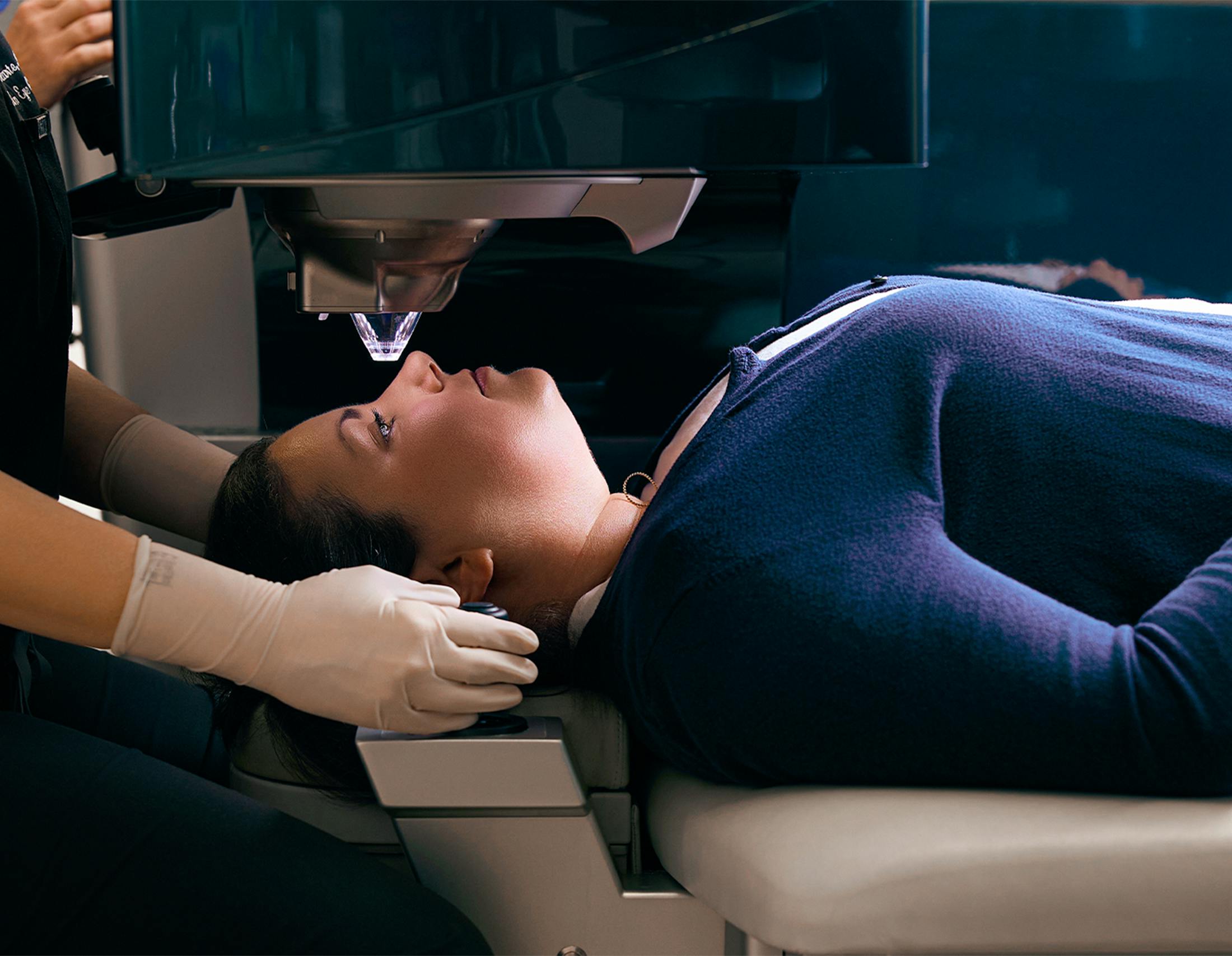

woman getting eye treatment

Stop the Progression Before It Steals Your Vision

Keratoconus is a progressive condition, and progression is its most dangerous quality. As the cornea continues to thin and steepen over time, vision deteriorates, contact lens tolerance diminishes, and the window for less invasive treatment narrows. Corneal cross-linking changes that trajectory. By permanently strengthening the collagen bonds within the corneal stroma, cross-linking halts the weakening process that drives keratoconus forward, stabilizing the cornea and preserving the visual potential that remains. It does not reverse damage that has already occurred, but for patients whose keratoconus is progressing, it is the most important intervention available.

At Princeton Eye Group, corneal cross-linking in Princeton, Monroe Township, & Somerset, NJ, is performed by fellowship-trained specialists with deep expertise in keratoconus management, offering patients throughout New Jersey access to this vision-preserving treatment close to home.

woman smiling

What Is Corneal Cross-Linking?

Corneal cross-linking (CXL) is a minimally invasive outpatient procedure that uses ultraviolet-A (UVA) light in combination with riboflavin (vitamin B2) eye drops to strengthen the collagen fibers within the corneal stroma. The riboflavin acts as a photosensitizer, absorbing UVA light and triggering a chemical reaction that creates new bonds between adjacent collagen fibers, significantly increasing the mechanical rigidity and tensile strength of the cornea. The result is a cornea that is better able to resist the progressive thinning and deformation characteristic of keratoconus and other ectatic conditions. Cross-linking is FDA-approved for the treatment of progressive keratoconus and is the only treatment proven to stop its progression rather than simply managing its effects.

The Benefits of Corneal Cross-Linking

  • The Only Proven Way to Stop Keratoconus Progression: Corneal cross-linking is the only FDA-approved treatment demonstrated to halt the progression of keratoconus, making it the most important intervention available for patients with advancing disease.
  • Preserves Long-Term Visual Potential: By stabilizing the cornea before significant thinning and distortion accumulate, cross-linking protects the vision the patient currently has and preserves options for future treatment, including specialty contact lenses and surgical correction.
  • Reduces the Risk of Requiring Corneal Transplantation: Patients who undergo timely cross-linking significantly reduce their likelihood of eventually needing a corneal transplant, as progression is the primary driver of disease severity in keratoconus.
  • Minimally Invasive Outpatient Procedure: Cross-linking is performed in an outpatient setting under topical anesthesia, requires no incisions, and allows patients to return home the same day.
  • Can Be Combined With Other Corneal Procedures: Cross-linking is frequently performed in combination with topography-guided PRK or other minimally invasive corneal procedures to simultaneously stabilize the cornea and improve its shape, addressing both progression and visual quality in a single treatment session.
  • Durable, Long-Lasting Results: Clinical studies demonstrate that the strengthening effect of corneal cross-linking is durable over the long term, with the majority of treated patients showing sustained stabilization of corneal topography for many years following treatment.

Schedule a Consultation

Contact Us

Is Corneal Cross-Linking Right for Me?

Corneal cross-linking in New Jersey is recommended for patients with documented progressive keratoconus or post-refractive ectasia who have sufficient corneal thickness to undergo the procedure safely. The ideal candidate is a patient whose keratoconus is advancing, as demonstrated by changes in corneal topography, increasing myopia or astigmatism, or worsening vision over time. Earlier treatment generally produces better outcomes, as cross-linking is more effective at preserving existing corneal architecture than at reversing damage that has already accumulated.

Cross-linking may not be appropriate for patients with corneas that are too thin for safe treatment, significant central corneal scarring, or certain ocular surface conditions. A comprehensive corneal evaluation at Princeton Eye Group, including detailed topography and tomography, will determine whether cross-linking is indicated and which treatment protocol is best suited to your corneal profile.

The Corneal Cross-Linking Process What to Expect

Comprehensive Corneal Evaluation

Your Princeton Eye Group specialist will perform detailed corneal topography, tomography, and pachymetry to document the degree and pattern of keratoconus, confirm progression, assess corneal thickness, and determine the most appropriate cross-linking protocol for your situation.

Pre-Treatment Preparation

Contact lens wear must be discontinued prior to treatment to allow the cornea to return to its natural shape for accurate measurements. Your physician will provide specific instructions on the duration of lens cessation required before your procedure.

Procedure Day

For epithelium-off cross-linking, the corneal epithelium is gently removed under topical anesthesia. Riboflavin drops are applied to the cornea for approximately 30 minutes, followed by carefully calibrated UVA light treatment. The entire procedure takes approximately 60 to 90 minutes, depending on the protocol used.

Immediate Post-Treatment

A bandage contact lens is placed on the eye following epithelium-off cross-linking to protect the corneal surface while the epithelium heals. Antibiotic and anti-inflammatory eye drops are prescribed, and some discomfort, light sensitivity, and blurred vision are expected during the first few days of recovery.

Epithelial Healing

The corneal epithelium typically heals within three to five days following treatment. The bandage contact lens is removed once epithelial healing is confirmed at a follow-up appointment.

Long-Term Monitoring

Corneal topography is performed at regular intervals following cross-linking to assess the stabilization response and confirm that progression has been halted. Ongoing monitoring is an essential component of keratoconus management even after successful cross-linking.

Your Corneal Cross-Linking Results and Recovery

Recovery from corneal cross-linking in NJ involves a healing period of approximately one week during which the corneal epithelium regenerates and early post-operative discomfort resolves. Light sensitivity, tearing, and blurred vision are common during this period and typically improve significantly once the epithelium has healed. Vision may fluctuate for several months following the procedure as the corneal stroma responds to treatment and topographic changes stabilize. In some patients, a modest improvement in corneal shape is observed following cross-linking as the stroma remodels. However, the primary goal of the procedure is stabilization rather than visual improvement. The full effect of cross-linking on corneal topography is typically assessed at the six to twelve-month follow-up. At this point, most patients demonstrate stable or improved measurements compared to their pre-treatment baseline.

Visual field analyzer

Why Choose Princeton Eye Group for Corneal Cross-Linking?

Princeton Eye Group offers fellowship-trained corneal expertise, advanced diagnostic technology, and access to the most current cross-linking protocols and combined treatment approaches in New Jersey.

Dr. Anita Miedziak: Pioneer in Corneal Cross-Linking

Dr. Miedziak brings a depth of cross-linking expertise that is exceptionally rare. She served as a site investigator in the pivotal Phase 3 clinical trial that ultimately led to FDA approval of corneal cross-linking in the United States. This firsthand involvement in the research that brought cross-linking to patients nationwide reflects a physician who has been at the forefront of this treatment since its earliest days. As Director of Cornea and Contact Lens Services, she brings fellowship-level training from Wills Eye Hospital and Johns Hopkins Wilmer Institute to every patient she treats.

Dr. Rahul Tonk: A National Leader in Keratoconus Management

Dr. Tonk's expertise in keratoconus management encompasses cross-linking, topography-guided PRK, CAIRS, and CTAK. His training at Bascom Palmer Eye Institute and his national profile as a key opinion leader in anterior segment surgery place him among the most qualified keratoconus specialists available to patients in the region.

A Multidisciplinary Approach to Keratoconus Care

Keratoconus care is too often fragmented—patients may see one provider for contact lenses, another for cross-linking, and yet another for surgical options, with little coordination between them. At Princeton Eye Group, Dr. Miedziak, Dr. Tonk, and Dr. Kevin Feng, our scleral lens specialist, work collaboratively to provide a truly integrated, multifaceted approach to keratoconus management. From specialty contact lens fitting and cross-linking to minimally invasive corneal surgery and transplantation when needed, every level of care is available within a single, coordinated practice.

Combined Treatment Protocol

For patients who would benefit from both corneal stabilization and shape correction, Princeton Eye Group offers combined cross-linking with a corneal reshaping procedure (link), such as PRK, CAIRS, or CTAK, delivering a more comprehensive treatment outcome than cross-linking alone can achieve.

Advanced Diagnostic Imaging

Accurate topographic and tomographic mapping of the cornea is essential to both the diagnosis of keratoconus progression and the planning of cross-linking treatment. Princeton Eye Group's offices are equipped with advanced corneal imaging technology to ensure the most precise pre- and post-treatment assessment.

Convenient Locations Across Central New Jersey

With offices in Princeton, Monroe Township, and Somerset, Princeton Eye Group makes expert corneal cross-linking accessible to patients throughout New Jersey without the need to travel to a major academic center.

Corneal Cross-Linking Frequently Asked Questions

At what age should cross-linking be performed?

Cross-linking is most commonly performed in adolescents and young adults, as keratoconus tends to progress most rapidly during these years. However, progression can occur at any age, and cross-linking is appropriate for any patient with documented progression and sufficient corneal thickness, regardless of age. Earlier treatment generally produces better long-term outcomes by preserving more of the existing corneal architecture.

Will cross-linking improve my vision?

The primary goal of cross-linking is to halt progression rather than to improve vision. Some patients experience a modest improvement in corneal regularity and visual acuity following treatment as the stroma remodels, but significant vision improvement should not be the primary expectation. For patients seeking visual improvement in addition to stabilization, combined cross-linking and topography-guided PRK may offer a more comprehensive outcome.

How long does the effect of cross-linking last?

Clinical studies demonstrate durable stabilization of corneal topography for many years following cross-linking, with the majority of patients showing maintained or improved measurements at long-term follow-up. Cross-linking is considered a permanent structural modification to the corneal collagen, and the strengthening effect does not diminish over time in the way that some pharmacological treatments do.

Can cross-linking be repeated?

In rare cases where progression resumes following an initial cross-linking treatment, repeat cross-linking may be considered. However, the procedure is generally effective as a single treatment in the majority of appropriately selected patients.

Is corneal cross-linking painful?

The procedure is performed under topical anesthesia and is generally well tolerated during treatment. The post-operative period following epithelium-off cross-linking involves some discomfort, light sensitivity, and tearing for the first few days while the epithelium heals. Most patients find this period manageable with prescribed medications and over-the-counter pain relief as needed.

Does insurance cover corneal cross-linking?

Cross-linking is FDA-approved for progressive keratoconus and is covered by many insurance plans, including Medicare, when medical necessity criteria are met. Coverage varies by insurer and specific plan. Our team can help verify your coverage and discuss any out-of-pocket costs prior to scheduling your procedure.

How is progress monitored after cross-linking?

Corneal topography is performed at regular intervals following treatment, typically at one month, three months, six months, and one year, and annually thereafter. Stable or improved topographic measurements confirm that progression has been successfully halted. Your physician will also monitor your visual acuity, refraction, and corneal thickness at each follow-up visit.

Can I wear contact lenses after cross-linking?

Contact lens wear is typically paused for several weeks following cross-linking while the cornea heals. Once healing is confirmed and the corneal surface has stabilized, most patients resume their specialty contact lens wear. Many patients find that their lens fit and comfort improve following cross-linking as the corneal shape becomes more stable.

Accessibility: If you are vision-impaired or have some other impairment covered by the Americans with Disabilities Act or a similar law, and you wish to discuss potential accommodations related to using this website, please contact our Accessibility Manager at (609) 921-9437.
Request an Appointment