Corneal Transplantation Princeton, Monroe Township, & Somerset, NJ

Corneal transplantation is one of the most successful and transformative surgical procedures in all of ophthalmology, offering patients with advanced corneal disease a genuine path to restored vision.
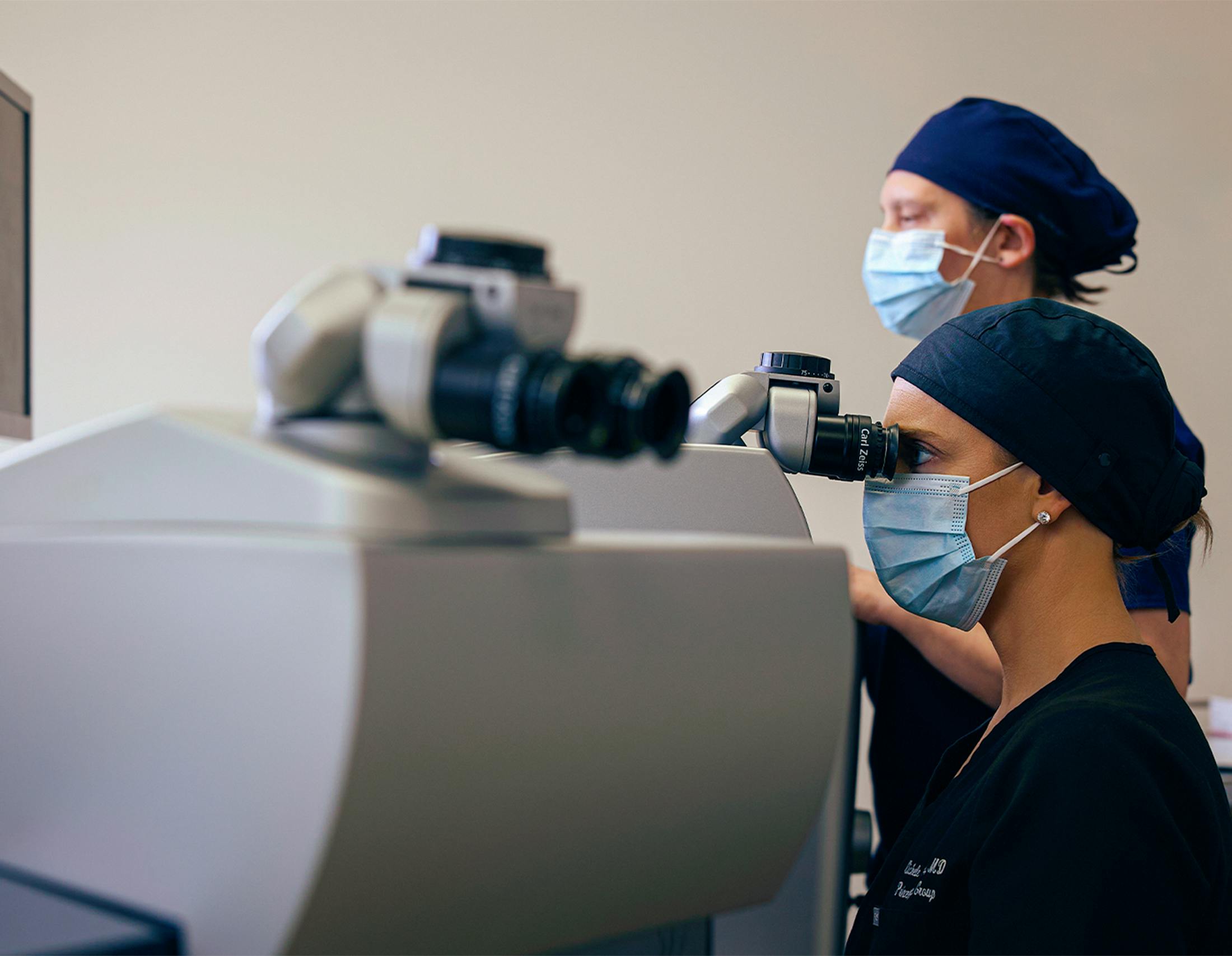

Two masked clinicians operating ophthalmic diagnostic equipment during an eye procedure

When the Cornea Can No Longer Heal Itself

For most corneal conditions, treatment begins conservatively, with medications, specialty contact lenses, or minimally invasive procedures. But when corneal disease progresses to the point where vision can no longer be adequately corrected, or when painful swelling and scarring cannot be managed by other means, corneal transplantation offers what nothing else can: the replacement of damaged tissue with healthy donor cornea. Today's transplant techniques are more precise, less invasive, and more targeted than ever before, allowing surgeons to replace only the specific layers of the cornea affected by disease and preserve as much healthy tissue as possible.

At Princeton Eye Group, our fellowship-trained corneal specialists perform the full range of modern corneal transplants in Princeton, Monroe Township, & Somerset, NJ. We deliver outcomes that reflect decades of subspecialty training at the world's leading eye institutions.

man smiling

What Is Corneal Transplantation?

Corneal transplantation is a surgical procedure in which diseased, damaged, or dysfunctional corneal tissue is replaced with healthy donor tissue from an eye bank. The procedure may involve the full thickness of the cornea or only the specific layers affected by disease, depending on the nature and extent of the condition being treated. Modern corneal transplantation has evolved significantly from the traditional full-thickness approach, with newer partial-thickness techniques offering faster recovery, lower rejection rates, and better visual outcomes for many patients. Princeton Eye Group's corneal surgeons are experienced in the full spectrum of transplant techniques and will recommend the most appropriate procedure based on each patient's diagnosis, anatomy, and visual goals.


What Conditions Can a Corneal Transplant Treat?

Corneal transplantation may be considered when disease, swelling, scarring, or structural damage causes significant vision loss or discomfort that cannot be adequately managed with medication, specialty contact lenses, or less invasive treatments. The appropriate transplant procedure depends on which layers of the cornea are affected.

  • Fuchs Endothelial Corneal Dystrophy and Other Endothelial Diseases: Damage to the cornea’s inner cell layer can cause persistent corneal edema, blurred vision, and discomfort. DMEK or DSAEK may replace the affected layer and restore corneal clarity.
  • Pseudophakic Bullous Keratopathy and Corneal Edema Following Eye Surgery: Damage to endothelial cells after cataract surgery or another eye procedure can cause persistent swelling, pain, and vision loss.
  • Corneal Scars: Infections—including herpes-related corneal disease—as well as trauma, inflammation, or previous surgery, can produce scars that interfere with vision. Depending on the depth of the scar, treatment may involve partial- or full-thickness transplantation.
  • Corneal Dystrophies: Certain inherited conditions can cause progressive deposits, clouding, or structural damage within the cornea. A transplant may be considered when the disease significantly affects vision.
  • Advanced Keratoconus and Corneal Ectasia: Transplantation may be appropriate when advanced distortion or corneal scarring prevents satisfactory vision with specialty contact lenses or other treatments.
  • A Failed Previous Corneal Transplant: If a prior graft loses its clarity or function, a repeat transplant or layer-specific procedure may be considered.

Schedule a Consultation

Contact Us

Transplant Techniques We Offer

Penetrating Keratoplasty (PKP): Full-Thickness Transplantation

Penetrating keratoplasty is the traditional corneal transplant procedure, in which the full thickness of the diseased cornea is removed and replaced with a full-thickness donor button secured with fine sutures. PKP is indicated for conditions involving all layers of the cornea, including severe scarring from infection or trauma, advanced keratoconus, and cases where partial-thickness techniques are not appropriate. While recovery from PKP takes longer than newer techniques and sutures typically remain in place for a year or more, it remains an important and highly effective procedure for cases requiring complete corneal replacement. Vision can continue to improve for up to a year or more following surgery.

DMEK: Descemet Membrane Endothelial Keratoplasty

DMEK is the most advanced and precise partial-thickness corneal transplant technique currently available for endothelial corneal disease. The procedure involves transplanting only the innermost cell layer of the cornea, the Descemet membrane and its associated endothelial cells, without any supporting stromal tissue. Because only this ultra-thin layer is replaced, DMEK produces faster visual recovery, a lower risk of rejection, and superior final visual outcomes compared to older transplant techniques. It is the preferred procedure for Fuchs dystrophy and other endothelial diseases in appropriate candidates. DMEK is technically demanding and requires a high level of surgical expertise, making the experience and training of the performing surgeon particularly important.

DSAEK: Descemet Stripping Automated Endothelial Keratoplasty

DSAEK is a partial-thickness transplant technique that replaces the diseased endothelial layer along with a thin layer of supporting donor stromal tissue. While it does not achieve quite the same level of visual clarity as DMEK in most patients, DSAEK is a well-established procedure with an excellent safety record and meaningful advantages over traditional PKP, including significantly faster recovery, reduced astigmatism, and lower rejection rates. It remains the preferred option for certain patient populations and anatomical situations where DMEK may be more technically challenging.

DALK: Deep Anterior Lamellar Keratoplasty

Deep anterior lamellar keratoplasty is a partial-thickness transplant procedure used for corneal conditions affecting the anterior layers of the cornea while the endothelium remains healthy. By replacing only the anterior stroma while preserving the patient's own endothelial cells, DALK eliminates the risk of endothelial rejection. It preserves a stronger, more structurally intact eye than full-thickness PKP. DALK is particularly well-suited for patients with advanced keratoconus, corneal scarring from infections such as herpes, and other anterior corneal diseases. Recovery is faster than PKP, and the risk of rejection is significantly reduced.

The Benefits of Corneal Transplantation

  • Meaningful Vision Restoration: Corneal transplantation offers the potential for significant, lasting improvement in vision for patients whose corneal disease has progressed beyond what other treatments can address.
  • Targeted, Layer-Specific Treatment: Modern partial-thickness techniques replace only the diseased corneal layers, preserving healthy tissue and producing better outcomes with lower risk than traditional full-thickness transplantation.
  • Lower Rejection Rates With Modern Techniques: Partial-thickness procedures such as DMEK and DSAEK carry significantly lower rejection rates than full-thickness PKP, with most rejections that do occur being treatable when identified promptly.
  • Faster Recovery Than Traditional Transplantation: Patients undergoing DMEK and DSAEK typically recover vision within weeks to months, compared to the year or more often required following PKP.
  • Can Be Combined With Cataract Surgery: Corneal transplantation, particularly endothelial procedures, can often be performed at the same time as cataract surgery, addressing both conditions in a single operative session.
  • A Well-Established, Proven Procedure: Corneal transplantation is one of the most successful organ transplant procedures performed anywhere in medicine, with the vast majority of patients achieving meaningful improvement in vision and quality of life.

Is Corneal Transplantation Right for Me?

Corneal transplants in New Jersey are recommended when vision cannot be adequately corrected with glasses, contact lenses, or less invasive treatments, or when painful corneal swelling or structural damage cannot be managed by other means. The specific procedure recommended will depend on the nature and extent of your corneal disease, the layers of the cornea involved, and your overall ocular health.

A comprehensive corneal evaluation at Princeton Eye Group will determine whether transplantation is indicated, which technique is most appropriate for your condition, and what visual outcomes are realistic for your situation. Your physician will also discuss the role of the eye bank, the process of donor tissue procurement and testing, and what to expect before, during, and after surgery.

Banner media

The Corneal Transplantation Process What to Expect

Comprehensive Corneal Evaluation

Your Princeton Eye Group corneal specialist will perform a thorough assessment of your corneal health, including advanced imaging and measurements, to confirm the diagnosis and determine the most appropriate transplant technique.

Donor Tissue Procurement

Once a transplant is planned, your name is placed on the list at the local eye bank. Wait times are typically short. All donor tissue is rigorously tested for infectious diseases, including hepatitis and HIV, and carefully evaluated for clarity and cell quality before being released for transplantation.

Pre-Surgical Preparation

Your physician will provide specific instructions regarding medications to continue or pause before surgery, and any necessary pre-operative testing will be completed. Arrangements for a driver on the day of surgery will need to be made in advance.

Procedure Day

Corneal transplantation is a painless operation, performed on an outpatient basis under local or general anesthesia, depending on the patient's age, medical condition, and the procedure being performed. When it comes to endothelial procedures such as DMEK and DSAEK, an air bubble is used following surgery to help the donor tissue adhere to the back of the cornea.

Post-Operative Care

Following surgery, you will use antibiotic and steroid eye drops as prescribed and attend a series of follow-up appointments to monitor healing, assess graft clarity, and watch for signs of rejection. Steroid drops are typically continued for at least a year to minimize rejection risk.

Long-Term Monitoring

Corneal grafts require ongoing monitoring to assess long-term clarity, endothelial cell health, and visual outcomes. Your physician will continue to follow your progress at regular intervals following surgery.

Your Corneal Transplantation Results and Recovery

Recovery from a corneal transplant in New Jersey varies significantly depending on the procedure performed. Patients undergoing DMEK or DSAEK typically experience meaningful visual improvement within weeks to a few months, with most normal activities resumable within two weeks. PKP requires a longer recovery, with sutures remaining in place for a year or more and vision continuing to improve gradually over that period. Across all techniques, steroid eye drops are used for an extended period following surgery to reduce the risk of rejection. Corneal rejection occurs in approximately 20% of traditional transplants but at significantly lower rates with modern partial-thickness techniques. Warning signs of rejection include persistent discomfort, light sensitivity, redness, and a change in vision. These symptoms should be reported to your physician immediately, as most rejections can be treated successfully when identified early.

Visual field analyzer

Why Choose Princeton Eye Group for Corneal Transplantation?

Princeton Eye Group offers a depth of corneal surgical expertise that is exceptional for a private practice, with fellowship-trained specialists whose training spans some of the most prestigious eye institutions in the world.

Fellowship-Trained Corneal Surgeons

Dr. Anita Miedziak completed subspecialty training in cornea and refractive surgery at both Wills Eye Hospital and Johns Hopkins University Wilmer Institute, and is recognized as one of the most experienced corneal surgeons in the region, with thousands of procedures performed. Dr. Rahul Tonk trained at and served as Associate Professor and Associate Medical Director at Bascom Palmer Eye Institute, the nation's top-ranked eye hospital, where corneal transplantation is performed at the highest volume and complexity.

Advanced Surgical Techniques

Princeton Eye Group performs the full spectrum of modern corneal transplant procedures, including DMEK, DSAEK, DALK, and PKP. This breadth of surgical capability ensures that every patient receives the most appropriate technique for their specific condition rather than a one-size-fits-all approach.

A Center of Excellence Affiliation

Princeton Eye Group has been designated a Center of Excellence by Wills Eye Hospital, one of the most consistently top-ranked eye hospitals in the nation. This affiliation reflects the practice's adherence to the highest standards of surgical quality and patient care.

Integrated Subspecialty Care

Because Princeton Eye Group covers nearly every ophthalmic subspecialty, corneal transplant patients benefit from seamless access to glaucoma, retinal, and cataract specialists when their care requires it. Conditions such as Fuchs dystrophy frequently involve cataract surgery as well, and our team is uniquely positioned to address both in a coordinated, efficient manner.

Serving Central New Jersey Since 1980

With offices in Princeton, Monroe Township, and Somerset, Princeton Eye Group has been the trusted eye care provider for generations of patients throughout Central New Jersey, combining world-class corneal surgical expertise with the continuity and accessibility of a community practice.

Corneal Transplantation Frequently Asked Questions

How long does it take to recover from a corneal transplant?

Recovery depends significantly on the procedure performed. DMEK and DSAEK patients typically resume most normal activities within two weeks, with meaningful visual improvement within one to three months. PKP recovery is considerably longer, with sutures in place for a year or more and vision continuing to improve gradually throughout that period.

What is Fuchs dystrophy, and how does corneal transplantation treat it?

Fuchs dystrophy is a hereditary condition in which the endothelial cells lining the inner surface of the cornea gradually deteriorate, causing the cornea to swell and vision to cloud. When medications and contact lenses can no longer manage the swelling, corneal transplantation replaces the diseased endothelial layer with healthy donor cells. DMEK is the preferred technique for most Fuchs dystrophy patients, offering faster recovery and better visual outcomes than older approaches.

What are the signs of corneal transplant rejection?

Warning signs of rejection include persistent eye discomfort, increased light sensitivity, redness, and a noticeable change in vision. These symptoms should be reported to your physician immediately. Most rejections, when identified and treated promptly with steroid eye drops, can be successfully halted with minimal lasting impact on the graft.

Can a corneal transplant be repeated if it fails?

Yes. Corneal transplantation can be repeated, generally with good results, though the overall rejection rate for repeat transplants is higher than for first-time procedures. Your physician will discuss the options and realistic expectations if a repeat transplant is indicated.

Does insurance cover corneal transplantation?

Corneal transplantation performed for medical indications is generally covered by Medicare and most medical insurance plans. Our team can help verify your coverage and answer any questions about costs prior to scheduling your procedure.

How is donor tissue obtained, and is it safe?

Donor corneas are obtained through accredited eye banks, which rigorously test all tissue for infectious diseases, including hepatitis and HIV, and carefully evaluate clarity and endothelial cell quality before release. The safety record of eye-banked tissue is excellent, and the risk of disease transmission from donor tissue is extremely low.

What activities should I avoid after corneal transplant surgery?

In the immediate post-operative period, you should avoid rubbing or pressing on the eye, strenuous exercise, and swimming. Your physician will provide a personalized timeline for returning to specific activities based on the procedure performed and your rate of healing.

Do I need a referral to see a corneal specialist at Princeton Eye Group?

No referral is required. Patients are welcome to schedule directly with Princeton Eye Group at any of our three locations in Princeton, Monroe Township, and Somerset. We also welcome referrals from optometrists and primary care physicians throughout Central New Jersey.

Accessibility: If you are vision-impaired or have some other impairment covered by the Americans with Disabilities Act or a similar law, and you wish to discuss potential accommodations related to using this website, please contact our Accessibility Manager at (609) 921-9437.
Request an Appointment