Extended Depth of Focus (EDOF) Intraocular Lenses Princeton, Monroe Township, & Somerset, NJ

Extended depth of focus intraocular lenses offer cataract patients a continuous, natural range of vision from distance through intermediate, with less potential for visual disturbances than traditional multifocal designs.


doctor showing a patient an IOL

A Broader Range of Vision, A More Natural Visual Experience

Not every cataract patient is looking for the same outcome. For patients who prioritize exceptional distance and intermediate vision and a high-quality visual experience in low light, extended depth of focus technology represents a compelling alternative. Rather than splitting light across multiple discrete focal points, EDOF lenses stretch and elongate a single zone of focus, delivering a seamless range of vision without the visual aberrations that some patients experience with multifocal optics.

At Princeton Eye Group, we offer the leading EDOF lens currently available in NJ, and our surgeons take the time to match each patient with the lens technology best suited to their visual lifestyle and expectations.

man crossing his arms

What Is an Extended Depth of Focus Lens?

An extended depth of focus (EDOF) intraocular lens is a premium IOL that provides a continuous, elongated range of clear vision rather than dividing light across separate near, intermediate, and distance focal points as traditional multifocal lenses do. By stretching a single zone of focus rather than splitting light through concentric rings, EDOF lenses produce a more seamless visual experience with significantly reduced halos and contrast loss, particularly in low-light conditions. The trade-off compared to a trifocal multifocal lens is that EDOF lenses generally provide excellent distance and intermediate vision but typically require over-the-counter reading glasses for fine, close-up print. For patients who spend a significant amount of time driving, using computers, and engaging in activities at distances and intermediate ranges, EDOF lenses often represent the ideal balance between visual range and optical quality.
The Benefits of Extended Depth of Focus Lenses

  • Seamless, Continuous Range of Vision: EDOF lenses stretch focus into a smooth, uninterrupted range from distance through intermediate.
  • Superior Low-Light Performance: Because EDOF lenses do not divide light across multiple focal points, they maintain better contrast sensitivity and produce fewer halos and glare around lights at night, making them particularly well-suited for patients who drive frequently after dark.
  • Faster, Easier Neurological Adaptation: The more natural optical behavior of EDOF lenses typically results in a smoother, shorter adaptation period compared to trifocal multifocal lenses, with fewer patients reporting bothersome visual disturbances during the adjustment phase.
  • Excellent Distance and Intermediate Vision: EDOF lenses consistently deliver high-quality distance vision for driving and outdoor activities and strong intermediate vision for computer work, dashboard reading, and most everyday tasks.
  • Forgiving Optical Design: The smooth, ring-free optical profile of certain EDOF lenses makes them more tolerant of minor lens rotation or decentration following implantation, contributing to a more predictable and consistent surgical outcome. This design is particularly well-suited for patients who have coexisting ocular conditions, such as glaucoma, mild macular degeneration, or a history of prior eye surgery, in which a multifocal IOL may be contraindicated.
  • Toric Options for Astigmatism: EDOF lenses are available in toric versions that simultaneously correct pre-existing astigmatism, further reducing dependence on glasses following surgery.

Is an Extended Depth of Focus Lens Right for Me?

EDOF lenses are an excellent option for patients who prioritize high-quality distance and intermediate vision with minimal visual disturbances, particularly those who are sensitive to glare and halos or who have significant nighttime driving demands. They are also well-suited for patients who have been advised against multifocal lenses due to coexisting ocular conditions that may affect contrast sensitivity, or who simply prefer a more conservative approach to spectacle independence with a more natural visual experience.

Patients should understand that EDOF lenses typically do not provide the same level of near vision as trifocal multifocal lenses, and reading glasses for fine print will still be needed for prolonged close-up tasks. A thorough consultation at Princeton Eye Group will help determine whether an EDOF lens is the right choice for your visual goals and lifestyle.

Banner media

EDOF Lenses We Offer

Vivity

The Alcon Vivity lens is one of the most widely used extended depth of focus lenses in the world, featuring Alcon's proprietary X-WAVE technology. Rather than using diffractive rings to split light, Vivity uses a non-diffractive wavefront-shaping approach to stretch and shift the depth of focus, delivering a continuous range of vision from distance through intermediate with excellent contrast sensitivity and minimal halos and glare. Vivity does not carry an FDA warning for loss of contrast sensitivity in low light, making it particularly well-suited for patients with higher demands for optical quality in challenging lighting conditions. A toric version is available for patients with pre-existing astigmatism.

TECNIS PureSee

The TECNIS PureSee by Johnson & Johnson Vision is a next-generation EDOF lens that uses a purely refractive design to extend the depth of focus without the concentric diffractive rings found in traditional multifocal lenses. By gently stretching a single, smooth zone of focus rather than splitting light, PureSee delivers crisp distance vision and strong intermediate vision—ideal for driving, television, computer work, and most daily activities—with a low-disturbance optical experience that closely resembles a standard monofocal lens in terms of nighttime visual quality. PureSee does not carry an FDA warning regarding loss of contrast sensitivity in low light, and its ring-free design makes it highly tolerant of minor lens rotation or decentration. Most patients will still benefit from over-the-counter reading glasses for fine, close-up print. A toric version is also available.

Schedule a Consultation

Contact Us

The EDOF Lens Process What to Expect

Comprehensive Pre-Operative Evaluation

Your Princeton Eye Group surgeon will perform advanced biometry, corneal topography, and a thorough assessment of your visual lifestyle and goals to confirm your candidacy for an EDOF lens and determine which platform is best suited to your eyes.

Lens Selection and Expectation Setting

Your surgeon will explain the differences between EDOF and multifocal lens options, help you understand what level of spectacle independence is realistic for your anatomy and goals, and address any questions you have before proceeding.

Procedure Day

EDOF lens implantation is performed as part of standard cataract surgery on an outpatient basis, typically taking 15 to 30 minutes per eye. The lens is inserted through the same small, self-sealing incision used to remove the clouded natural lens.

Early Recovery

Most patients notice meaningful improvement in distance and intermediate vision within the first day or two following surgery. The adaptation period for EDOF lenses is generally shorter and smoother than for multifocal lenses, with fewer patients reporting bothersome visual disturbances during recovery.

Visual Stabilization and Follow-Up

Final visual outcomes are typically appreciated within a few weeks to months following surgery. Your physician will monitor your progress at scheduled follow-up appointments and address any questions about your visual experience during the adaptation period.

Your EDOF Lens Results and Recovery

Most patients with EDOF intraocular lenses achieve excellent distance and intermediate vision with meaningful freedom from glasses for the majority of daily activities. Reading glasses may still be needed for prolonged close-up tasks, and patients should enter surgery with realistic expectations about near vision performance. Visual disturbances such as halos and glare are significantly less common with EDOF lenses than with traditional multifocal designs, and the adaptation period is generally shorter and more comfortable. Patient satisfaction rates with leading EDOF platforms are consistently high, reflecting the combination of broad functional vision and high optical quality these lenses provide.

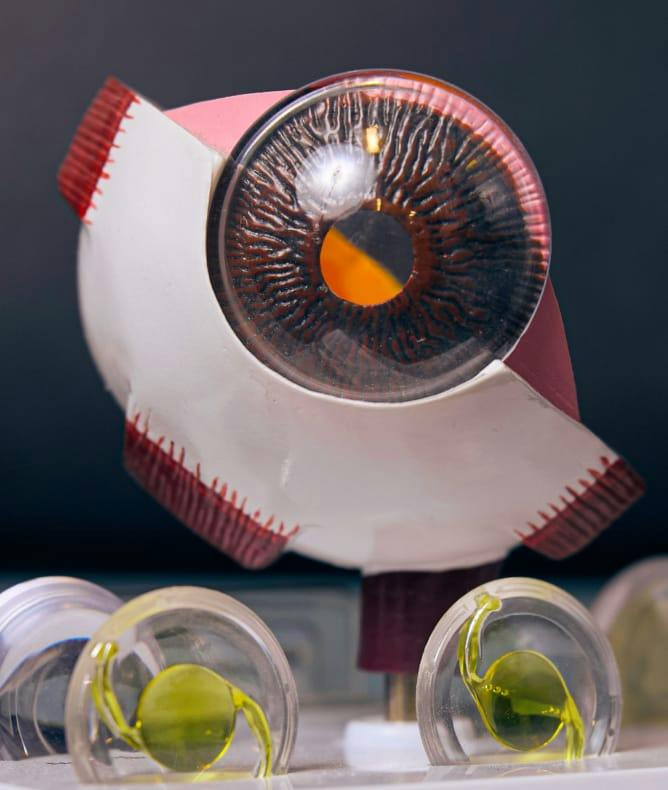
Eye model with premium intraocular lenses

Why Choose Princeton Eye Group for EDOF Lens Implantation?

Princeton Eye Group offers the leading EDOF lens platforms, advanced pre-operative planning, and the subspecialty depth to ensure that every premium lens patient receives the most precise and personalized surgical experience available in New Jersey. Our surgeons were among the first in the region and the United States to implant extended depth of focus lenses, giving our team a depth of familiarity with these platforms that only comes from years of hands-on experience at the forefront of premium lens technology.

Expert Lens Selection Guidance

Choosing between EDOF and multifocal lens platforms requires a nuanced understanding of each patient's visual lifestyle, ocular health, and optical profile. Princeton Eye Group's surgeons bring decades of premium lens implantation experience to every consultation, ensuring that lens selection is always driven by what is genuinely best for the individual patient.

Advanced Pre-Operative Precision

Optimal outcomes with premium IOLs depend on the accuracy of pre-operative measurements and refractive planning. Princeton Eye Group uses advanced biometry and corneal imaging technology to achieve the highest possible level of surgical precision for every premium lens patient.

The Full Spectrum of Premium Lens Options

Princeton Eye Group offers the complete range of premium intraocular lens technologies, including multifocal, EDOF, light-adjustable, and toric lenses. This breadth of options ensures that every patient has access to the lens that is genuinely best matched to their individual needs, rather than being limited to what a practice happens to offer.

Subspecialty Support for Complex Cases

Patients with coexisting corneal, glaucoma, or retinal conditions require careful evaluation before premium lens implantation. Because Princeton Eye Group covers nearly every ophthalmic subspecialty, complex cases benefit from the input of the full team, maximizing safety and optimizing outcomes.

Serving Central New Jersey Since 1980

With offices in Princeton, Monroe Township, and Somerset, Princeton Eye Group has been the trusted cataract care provider for generations of patients throughout Central New Jersey, combining world-class surgical expertise with the personalized attention of a physician-led community practice.

Extended Depth of Focus Lens Frequently Asked Questions

What is the difference between an EDOF lens and a multifocal lens?

Multifocal lenses split light across multiple discrete focal points to provide near, intermediate, and distance vision simultaneously. In contrast, EDOF lenses stretch a single zone of focus into a continuous range from distance to intermediate. EDOF lenses generally produce fewer halos and glare and adapt more naturally, but typically do not provide the same level of near vision as trifocal multifocal designs.

Will I still need reading glasses with an EDOF lens?

Most patients with EDOF lenses achieve excellent distance and intermediate vision without glasses. However, most still benefit from over-the-counter reading glasses for prolonged fine print reading or very close-up tasks. Your surgeon will help you set realistic expectations based on your specific goals and anatomy.

What is the difference between Vivity and TECNIS PureSee?

Both are leading EDOF platforms that use non-diffractive optical designs to extend the depth of focus without concentric rings. Vivity uses Alcon's X-WAVE wavefront-shaping technology, while PureSee uses a purely refractive design. Both offer excellent distance and intermediate vision with minimal visual disturbances, and neither carries an FDA warning for loss of contrast sensitivity. Your surgeon will review the specific differences and recommend the platform best suited to your eyes and lifestyle.

Are EDOF lenses suitable for patients with dry eye or early macular changes?

EDOF lenses are generally better tolerated than multifocal lenses in patients with mild dry eye or early macular changes, as their optical design is less sensitive to reductions in contrast sensitivity. However, a thorough pre-operative evaluation is essential to determine whether any coexisting condition may affect the expected outcome. Your physician will advise accordingly.

Does insurance cover an EDOF lens?

Medicare and most insurance plans cover standard cataract surgery, but the premium upgrade to an EDOF lens involves an out-of-pocket cost. Our team can discuss the associated costs and available financing options during your consultation.

Can an EDOF lens correct astigmatism?

Yes. Both Vivity and TECNIS PureSee are available in toric versions that simultaneously correct pre-existing astigmatism, further reducing dependence on glasses following surgery.

How do I know if an EDOF lens is the right choice for me?

The best way to determine whether an EDOF lens is right for you is through a comprehensive consultation at Princeton Eye Group. Your surgeon will assess your ocular health, refractive profile, and visual lifestyle, and help you understand which lens technology gives you the best chance of achieving your goals.

Accessibility: If you are vision-impaired or have some other impairment covered by the Americans with Disabilities Act or a similar law, and you wish to discuss potential accommodations related to using this website, please contact our Accessibility Manager at (609) 921-9437.
Request an Appointment